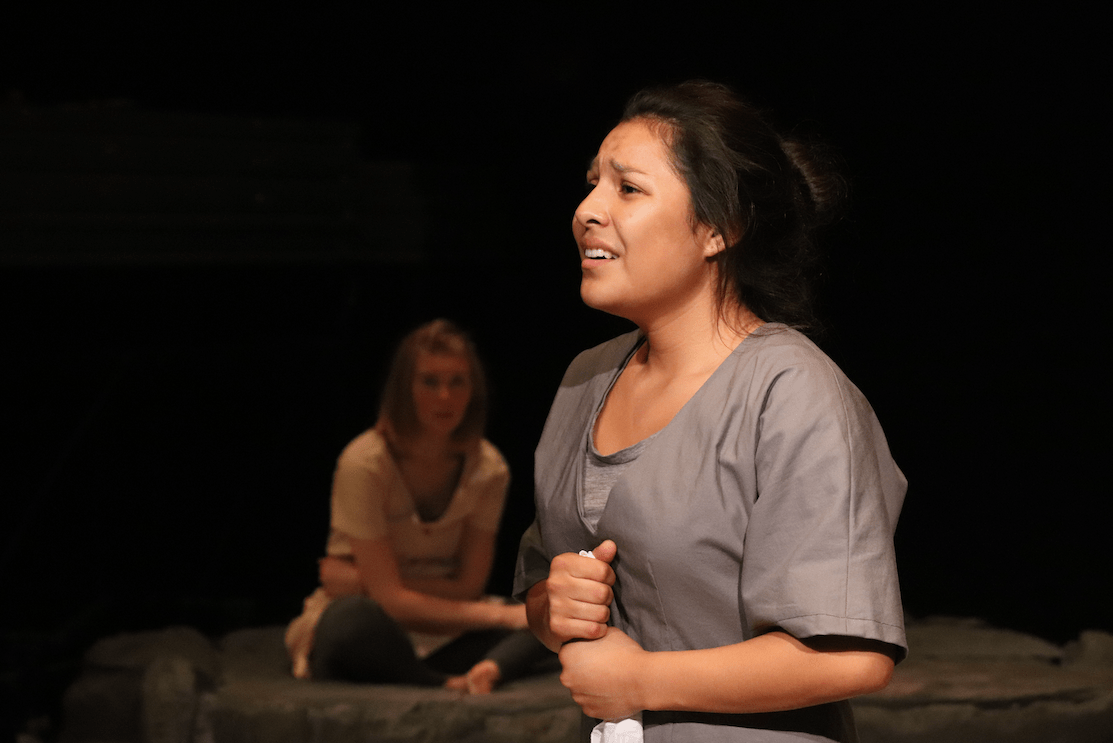
Antigone Review: A Battle of Dignity, Duty, and Raw Emotion
Few plays in the theatrical canon resonate with the raw, visceral power of Antigone. Whether you're encountering Sophocles' ancient Greek tragedy or one of its many modern adaptations, an Antigone play review often circles back to the same fundamental questions: What is the true cost of moral conviction? Is dignity a currency more valuable than peace? And what, ultimately, is worth dying for? This timeless narrative continues to captivate audiences, forcing them to confront uncomfortable truths about law, conscience, and the human spirit.
The essence of Antigone lies in its unflinching portrayal of a young woman's defiance against an unyielding authority. It's a journey that traverses the full spectrum of human emotion – from joy and sorrow to anguish and profound empathy. Through compelling performances and masterful direction, the story unfolds, pulling the audience into its heart and making them a part of Antigone's desperate struggle.
The Unwavering Spirit: Antigone's Moral Stance
At the core of any compelling antigone play review is the titular character herself. Antigone, a figure of unwavering moral certainty, stands in stark contrast to a world often willing to compromise its principles for the sake of order. In Jean Anouilh's powerful modern adaptation, a production that left audiences on the edge of their seats, Antigone embarks on a profound battle, not just against her uncle Creon, but against the very notion that peace could ever be bought at the expense of one's dignity.
Her family, steeped in tragedy and internal conflict, often finds itself at odds with her absolute sense of right and wrong. This internal family struggle amplifies the external clash with state law. Antigone's determination to bury her brother, Polyneices, against Creon's decree, is not merely an act of rebellion; it is a profound assertion of divine law and familial loyalty over human decree. This central conflict is what makes the play so enduringly relevant, inviting constant re-evaluation of our own societal norms and personal ethics. It challenges us to consider where our loyalties truly lie: with the laws of man or the dictates of our conscience.
A Masterclass in Emotion: The Electric Dynamic of Antigone and Creon
The emotional landscape of Antigone is rich and deeply affecting. What elevates a good production to an unforgettable one is often the raw, palpable emotion conveyed by its cast. One standout aspect repeatedly highlighted in an Antigone play review is the incredible acting, particularly the intimate and explosive chemistry between Antigone and her uncle, Creon. Their relationship is the play's dramatic crucible, taking the narrative to a whole new level of intensity.
The scenes between these two titans flow with an almost terrifying naturalness, captivating attention completely. As one reviewer noted about a memorable performance featuring Hannah Schuurman as Antigone and Norm Jones as Creon, the energy and passion between them were so heightened that even blinking felt like a missed opportunity. This intense dynamic is not just about dialogue; it's about the very air vibrating with tension and unspoken history, the deep wounds of a cursed lineage, and the clashing wills of two formidable individuals.
Consider the electrifying moments when Creon and Antigone are locked in their philosophical and emotional fight. A powerful image from one production saw Creon roll up his sleeves, leaning into the confrontation, challenging Antigone to "plunge your arm into life." Such phrases, delivered with poise and conviction, blur the lines between audience and stage, making you feel an intrinsic part of their unfolding story. This profound engagement extends beyond the central duo, encompassing the escalating tension between Antigone’s fiancé Haemon and the guards, adding further layers to the tragic tapestry. For a deeper dive into this pivotal relationship, explore Antigone On Stage: The Intense Chemistry of Creon and Antigone.
Beyond the Dialogue: Physicality and Visual Storytelling
The power of Antigone is not solely in its words but also in its breathtaking visual and physical storytelling. Imagery within the play is often stunning, conjuring scenes of "pounding of fists" and characters "wriggling in want," conveying profound emotion without a single line of dialogue. Directors often utilize ensemble work to enhance this theatricality, transforming the stage into a canvas for poignant human drama.
One particularly insightful director, Kimberly LaCroix, shared two powerful reminders with her cast during warm-ups that speak to the heart of physical theatre: "we think with our bodies" and "make sure to land with what you know to be true." These principles were vividly brought to life in between scenes, where the cast, often appearing almost as shadows in shades of grey and taupe, would re-emerge to create beautifully vivid and powerful images. These visual vignettes, far from being mere set changes, served to enhance the story, deepening its impact and providing poignant reflections on the unfolding drama. This fusion of verbal and non-verbal communication is vital for an impactful Antigone play review, allowing the audience to empathize on a deeper, more primal level.
Antigone Across Eras: From Ancient Greece to Modern Gangland
The enduring appeal of Antigone lies in its adaptability. While Sophocles' original is rooted in ancient Thebes, its themes are universal, allowing for compelling reinterpretations across centuries. Anouilh's version, for instance, stripped away some of the Greek chorus elements to focus on the individual and the state, making it particularly resonant in post-WWII Europe, reflecting the moral dilemmas of resistance and collaboration.
More contemporary adaptations push these boundaries even further. Roy Williams' version for Pilot Theatre, for example, daringly transposes the narrative from ancient Thebes to a modern gangland also named Thebes. In this setting, Creo (a powerful, vulpine Mark Monero) rules a gang of thieves warring against rivals, the Argives, led by Antigone’s brother, Orrin. Antigone (Savannah Gordon-Liburd) and her sister Esme (Frieda Thiel) work in Creo's nightclub, setting the stage for Orrin's murder and Antigone’s subsequent defiant act. This recontextualization highlights the timeless nature of power struggles, loyalty, and justice in a familiar, yet unsettling, contemporary landscape.
Navigating the Legacy: Challenges of Adaptation
Such bold adaptations, while offering fresh perspectives, also face unique challenges. As one reviewer aptly noted, watching any version of Antigone can feel like "launching into a box set somewhere into series 3" due to the complex, bloody history preceding the play's action. Antigone's family tree is famously convoluted – her mother was also her grandmother, her father blinded himself, her brothers killed each other. Retaining some of this history in a modern context without the 'mythic quality' can sometimes lead to jarring moments or unintentional laughs, as seen when references to Antigone's family being "inbreds" were met with audience amusement in Williams' version, perhaps not the intended effect.
Furthermore, the role of the gods, so central to Greek tragedy, can become ambiguous in modern settings. While some adaptations, like Marcus Romer's direction, cleverly reimagine the gods as "camera observers" seen through CCTV and social media, "capturing and commenting" on the action, their traditional function and significance can be lost. This highlights the delicate balance adapters must strike: honoring the original text's profound questions while making it accessible and relevant to a contemporary audience. For more on this, check out Modern Antigone: Greek Tragedy Transformed to Contemporary Stages.
A Call to Reflection: Why Antigone Resonates Today
The ending of Antigone, regardless of the specific production, is rarely neat or comforting. It is often abrupt, leaving the audience with a sudden, powerful imperative to reflect. There's a particular honesty and realism to its conclusion, leaving audiences with a profound respect for Antigone and her story, even if they cannot fully agree with her choices or the tragic inevitability of her fate.
The play forces us to confront uncomfortable questions about the nature of justice, the limits of authority, and the personal cost of conviction. In an increasingly complex world, where individual freedoms often clash with state dictates and where moral relativism can cloud clear judgment, Antigone's defiant cry remains as relevant as ever. It's a powerful reminder that some principles, some truths, transcend man-made laws and systems, demanding adherence even in the face of death. A thorough antigone play review must acknowledge this enduring capacity to provoke thought and inspire self-examination, making it a critical piece for contemporary audiences.
Conclusion: The Undying Flame of Antigone
From its ancient origins to its most cutting-edge adaptations, Antigone remains a theatrical masterpiece. It is a profound exploration of human dignity, duty, and raw emotion, showcasing the ultimate battle between individual conscience and state power. Through stunning performances, powerful imagery, and a narrative that refuses easy answers, the play continues to challenge, provoke, and inspire. Every production offers a unique lens through which to view this timeless story, but the core message remains: the human spirit, in its pursuit of what it knows to be true, possesses an indomitable strength capable of defying even the most formidable powers. To experience Antigone is to embark on a journey of self-reflection, a journey that leaves an indelible mark long after the final curtain falls, urging us to question, to feel, and to understand the enduring power of conviction.